

Fred Whitton Challenge training with ChatGPT or Claude.
Pick your start time, beat the clock at Calder Bridge and still have legs for Hardknott at 94 miles. Athmex gives your AI coach your event, FTP, gearing and the hours you really have. Create your free profile and we’ll show you the options for bringing your recent rides into the same conversation.
You. Your fitness. Your activity data. Together in Claude and ChatGPT.
Can ChatGPT or Claude help you train for the Fred Whitton Challenge?
Yes. ChatGPT or Claude can help you choose a start time that leaves room at the cut-offs, shape a build from the ballot to May, and work out whether your lowest gear gets you up 30% after 94 miles. It needs your FTP and when you tested it, your weight, your longest hilly rides, your gearing and the hours you can train.
Athmex keeps those in one athlete profile that ChatGPT or Claude can use in every conversation. The assistant gives the advice; Athmex keeps the context current.
- Event
- Fred Whitton Challenge
- 2027 date
- Sunday 9 May 2027
- Start and finish
- The Showfield, Grasmere. Riders start between 6am and 8am.
- Route
- About 112 miles (180 km) with 3,500 m of climbing
- Passes
- Kirkstone, Honister, Newlands, Whinlatter, Hardknott, Wrynose and Blea Tarn
- Cut-offs
- Braithwaite by 11.30am; Calder Bridge by 2.30pm
- Entry
- By ballot. General entry £125
- Age
- 16 and over
From the organiser’s 2027 route and entry pages, its terms and its 2027 route file. Feed stations and the minimum age come from the organiser’s FAQ, which doesn’t name an edition.
Your recent rides belong in the conversation too
A Fred Whitton build starts in the dark months and only reaches proper hills in spring. The useful questions come from how your long, hilly rides compare with a day of seven passes.
When your rides reach ChatGPT or Claude through your training platform’s own connection, your coach can see how the long days and the climbing are building, and what your power looked like on them. Routes differ by platform and by assistant.
Athmex doesn’t import activity. It keeps the context those rides are read against: your event, route, FTP, weight, weekly hours and constraints. Build your free athlete profile and Athmex will show you the best available way to bring your rides into ChatGPT or Claude for your setup.
From Athmex
Your event, route choice, FTP and when you tested it, weight, weekly hours, injuries and constraints.
From your training platform
The rides you’ve done, from Garmin, Wahoo, Strava and others, where a route exists for your setup.
In ChatGPT or Claude
One coaching conversation that can use both when you ask about your Fred Whitton build.
Your start time decides how much room the cut-offs leave
The Fred Whitton has one route and two cut-offs, and both are clock times. Riders leave the Showfield in Grasmere between 6am and 8am, and must be through Braithwaite by 11.30am and Calder Bridge by 2.30pm. A rider who sets off at 8am has two hours less for the same roads than one who goes at 6am.
Calder Bridge is the cut-off that shapes the day. It is also the second feed station, at 80.6 miles, about 130 km. From each end of the start window, the averages you need to reach it, stops included, look like this.
| Start | Time to the 2.30pm cut-off | Average needed over about 130 km |
|---|---|---|
| 6am | 8 hours 30 minutes | About 15.3 km/h |
| 7am | 7 hours 30 minutes | About 17.3 km/h |
| 8am | 6 hours 30 minutes | About 20 km/h |
Kirkstone, Honister, Newlands and Whinlatter all come before Calder Bridge, so that average has four passes in it. Braithwaite, at about 89 km between Newlands and Whinlatter, is the earlier check. The organiser gives no time limit beyond the two cut-offs.
An early start costs sleep and buys margin. Ask ChatGPT or Claude to estimate your time to Calder Bridge from your FTP, weight and a recent hilly ride, then choose the start that leaves room for both feeds.
Seven passes, with the steepest after 90 miles
The organiser’s 2027 route runs for about 112 miles, or 180 km, with 3,500 m of climbing. It lists seven passes, in this order: Kirkstone, Honister, Newlands, Whinlatter, Hardknott, Wrynose and Blea Tarn.
| Order | Pass | Summit | Where it falls |
|---|---|---|---|
| 1 | Kirkstone | About 458 m | About 21 km in, the first climb, on fresh legs |
| 2 | Honister | About 360 m | About 72 km, before the Buttermere feed |
| 3 | Newlands | About 325 m | About 80 km, after Buttermere and before the Braithwaite cut-off |
| 4 | Whinlatter | About 337 m | About 92 km, after Braithwaite |
| 5 | Hardknott | About 386 m | At 94 miles, about 152 km; listed by the organiser at 30% |
| 6 | Wrynose | About 394 m | About 157 km, straight after Hardknott |
| 7 | Blea Tarn | About 228 m | About 163 km, the last climb before Grasmere |
Summit distances and heights are read from the organiser’s 2027 route file, so treat them as approximate.
The hardest climb comes late, but most of the decisions are made in the first half. Kirkstone and Honister reward restraint: a common approach is to ride the early passes well below threshold and treat Buttermere as a pause, not a race. What you spend before Calder Bridge is what you won’t have in Eskdale.
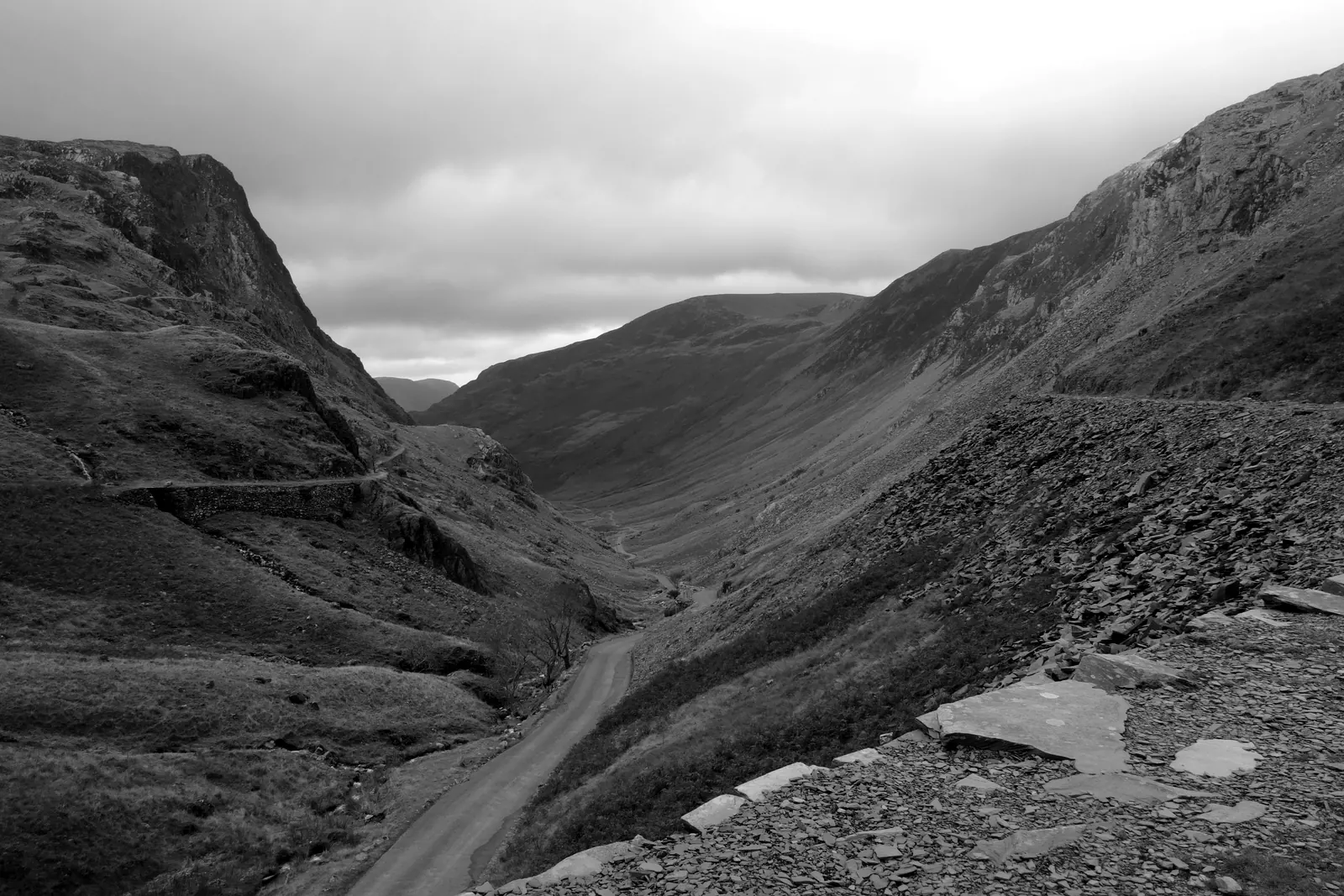
What 30% at 94 miles asks of your legs and your gears
The organiser lists Hardknott at 30% and places it 94 miles into the ride. Wrynose follows straight after, then Blea Tarn, with about 18 miles left to Grasmere.
On a gradient like that, speed stops mattering and power and gearing take over. Holding 6 km/h up 30% lifts a rider and bike weighing 80 kg about half a metre every second, which takes something close to 380 W. Even at 5 km/h it is over 300 W.
That is why gearing gets so much attention before this ride. On a 34 by 34 gear, 6 km/h is a cadence under 50 rpm. Many riders fit the largest cassette their rear derailleur takes, and ride it on their steepest local hill well before May.
Ask ChatGPT or Claude to work out, from your FTP, weight and lowest gear, what speed and cadence you can hold on 30%, and for how long. If the answer is not for long, decide in advance where you will stand or walk, and ride in shoes and cleats you can walk on. In the wet, standing on the steepest ramps can spin the back wheel, so staying seated with your weight back keeps traction.
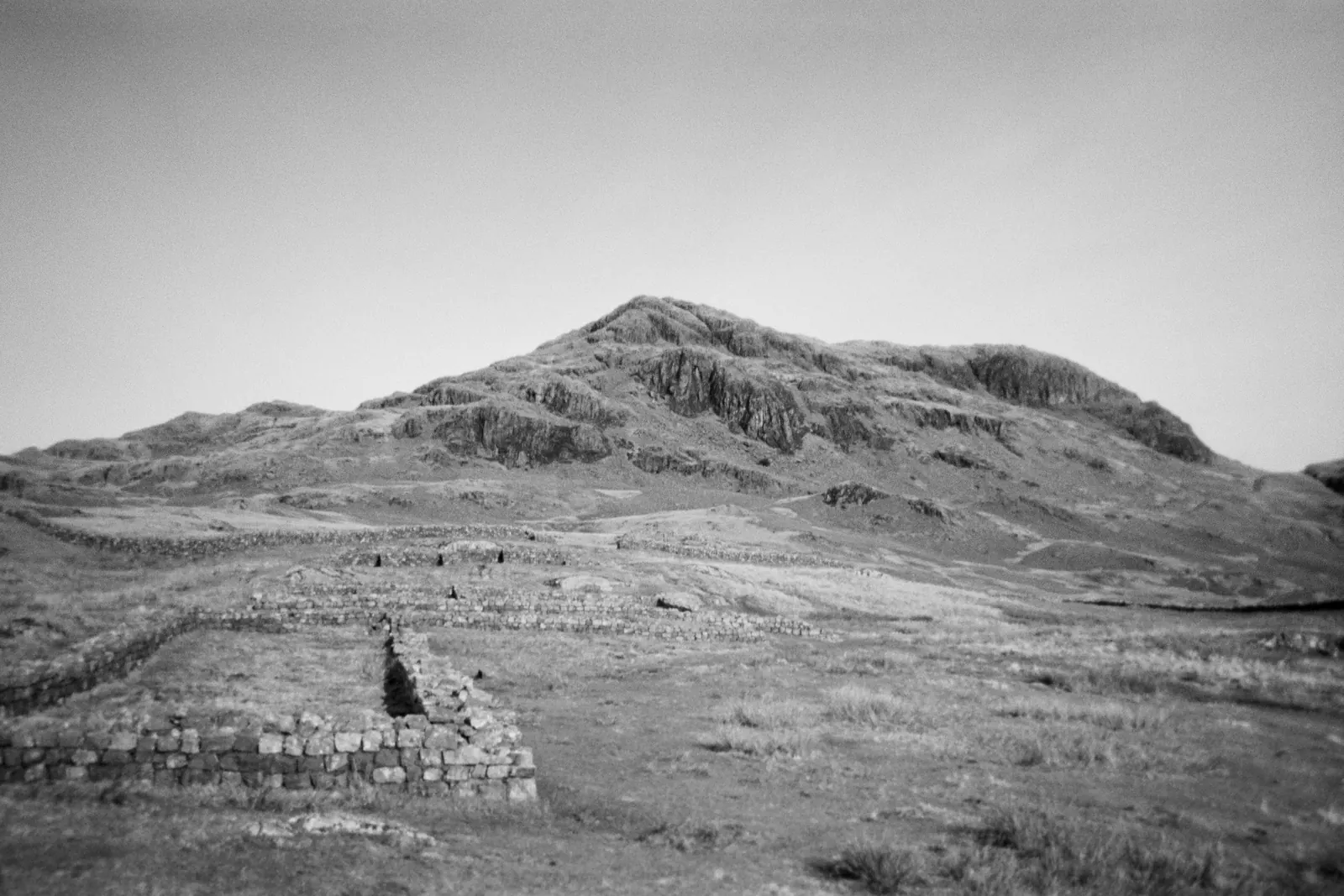
From the ballot to 9 May: what each month is for
The organiser advises having ridden a 100-mile sportive, and a hilly sportive with more than 2,800 m of climbing, before the Fred Whitton. Treat that as the benchmark for the whole build: a long, hilly day you finish with something left.
| Month | What the training is for |
|---|---|
| December | The ballot result, consistent weeks of easy riding, and strength work off the bike. |
| January | Seated, low-cadence climbing efforts indoors, for climbs you will ride under 50 rpm. |
| February | Long rides towards four hours on the hilliest roads near you, eating on every one. |
| March | Back-to-back hilly days, the longest steep climbs you can reach, and an FTP retest. |
| April | The benchmark day: around 100 miles and 2,800 m or more, on your race gearing and race food. |
| Early May | Taper. Nothing new on the bike, and the start time, food and gearing settled. |
Your hours decide what this looks like week to week. Tell ChatGPT or Claude your real week and where your nearest steep climbs are, and it can fit the months around them.
Two feed stations in 112 miles
The organiser lists two feed stations: Buttermere at 47.5 miles, about 76 km, and Calder Bridge at 80.6 miles, about 130 km. Both serve sandwiches, cakes, fruit and drinks.
After Calder Bridge there are about 50 km left, with Hardknott, Wrynose and Blea Tarn in them, and no third feed is listed. Leave Calder Bridge with full bottles and enough food for the rest of the ride, and eat before Hardknott, because few riders can eat on 30%.
Many endurance riders aim for somewhere around 60 to 90 grams of carbohydrate an hour once their gut is trained for it. Rehearse the amount and the food on the April benchmark ride, and keep the plan in the event’s notes in Athmex so the next conversation starts from it.
The ballot, the bike rules and the day in Grasmere
Entry is by ballot. For 2027, Special Charity, Deferred and Volunteer entries opened on 2 November 2026, and the general ballot runs from 1 to 10 December 2026. General entry is £125, and Special Charity entry is £325, of which £200 is a donation, plus processing charges. Up to 100 overseas places go first come, first served to riders who live abroad.
Entry fees aren’t refundable or transferable. If you cancel, the organiser gives what is left of your fee to charity after an admin cost. A deferral to the following year needs at least 21 days’ notice before the event and a replacement rider for your place, and you pay the fee again. Athmex has no connection with the Fred Whitton Challenge or its organiser, and Athmex doesn’t sell or manage entries.
Electric, fixed-wheel, fold-up, small-wheel, chopper and fat bikes aren’t allowed, nor are tri bars. Mountain bikes on slick tyres and tandems are allowed. You must wear a helmet throughout and carry a long-sleeved windproof or waterproof top, and you need photo ID at registration.
Supporters are asked not to meet riders on Hardknott, Wrynose or Blea Tarn, where there is no room. The terms suggest the top of Whinlatter or the fans zone at Wainwright’s in Chapel Stile instead.
What to bring to your Fred Whitton training conversation
Put your Fred Whitton date, current fitness, gearing and training week in one place before you ask for a plan.
- Event
- Fred Whitton Challenge, Sunday 9 May 2027, and the start time you’re planning.
- FTP
- Your current FTP and the date you tested it.
- Weight
- So the assistant can estimate your speed on 30%.
- Gearing
- Your chainset and cassette, above all your lowest gear.
- Hilly rides
- Your longest recent rides, with distance, climbing and time.
- Weekly hours
- What you can really ride each week, and where your nearest steep climbs are.
- Fuelling
- What you eat on long rides, and what your stomach refuses after six hours.
- Constraints
- Injuries, work, family and the trip to the Lakes.
Fred Whitton rider training example
A fictional rider, to show what a useful answer is built from: a dated FTP, real hilly rides, gearing and hours.
The questionShould I take a 6am start, and is a 34 by 32 low enough for Hardknott after 94 miles?
A useful answer starts from 230 W at 76 kg and the rider’s lowest gear. It estimates the time to Calder Bridge from a 6am and an 8am start against the 2.30pm cut-off, works out the speed and cadence that gear gives on 30%, and notes that the longest ride so far falls short of the organiser’s 2,800 m benchmark, so April needs a bigger day.
Climbing training with ChatGPT or Claude covers the steep, seated work this build relies on.
Example athlete profile
- Goal
- Finish inside both cut-offsFirst Fred Whitton
- Event
- Fred Whitton Challenge · Sunday 9 MayBallot place
- FTP
- 230 W · 3.0 W/kgTested in October
- Longest ride
- 161 km, 2,300 mLast August
- Lowest gear
- 34 by 32Compact chainset
- Weekly hours
- 7 to 9Two indoor evenings
- Constraints
- Left knee sore on long steep effortsPhysio booked for January
- Max heart rate
- Not knownLeft blank until it’s measured
Questions to bring back during the build
A Fred Whitton build runs from the ballot in December to the second Sunday in May. These are the moments to come back, with the question you might ask.
When the ballot result arrives
I’ve got a Fred Whitton place for 9 May. Save it as my main event and tell me what December is for.
A dated target lets every later answer count back from the day. Long-distance cycling with ChatGPT or Claude covers the base work.
After an FTP retest
I tested at 241 W today. Save it, then tell me what that changes for Calder Bridge from a 7am start.
A new FTP moves every estimate on this page. Save it with its date in Athmex. Raising FTP with ChatGPT or Claude explains how to test well.
After the benchmark ride
I rode 158 km with 2,900 m in eight hours. Is 34 by 32 enough, or should I change the cassette?
A real hilly day is the best evidence for your gearing and your start time. Save it, and update your lowest gear in Athmex if you change it.
In race week
I drive to Grasmere on Saturday. Plan my start time, what I carry from Calder Bridge and my effort on Kirkstone.
Race week is about arriving rested, with the bike checked and the last 50 km planned. What to tell ChatGPT or Claude before the day sets out what to share before the ride.
Getting your Fred Whitton context ready
- 01
Build your athlete profile
Add the Fred Whitton Challenge, 9 May 2027 and your planned start time, then your FTP with its test date, weight, lowest gear, longest hilly rides and weekly hours. Leave what you don’t know blank.
- 02
Connect ChatGPT or Claude
We walk you through it inside Athmex, step by step. No coding.
- 03
Bring your recent rides in too
We’ll show you the available options for bringing your rides from Garmin, Wahoo, Strava and other platforms into ChatGPT or Claude.
Where AI help stops
ChatGPT or Claude can misjudge a goal, plan more climbing than your body can absorb or rescale a whole block from a stale FTP, so read its plan critically and check it against how you feel.
Descending, bunch riding and mountain weather are skills and judgements no chat can practise for you. Pain, illness, fainting or anything medical needs a doctor. No AI can examine you.
Fred Whitton Challenge questions
Can ChatGPT make a Fred Whitton training plan?
Yes. ChatGPT or Claude can draft and adapt a Fred Whitton plan. It’s more useful when it knows your start time, FTP with its test date, weight, lowest gear, longest hilly rides and weekly hours. Athmex keeps those ready.
When is the Fred Whitton Challenge in 2027?
Sunday 9 May 2027, starting and finishing at the Showfield in Grasmere. Riders start between 6am and 8am.
How long and how hilly is the Fred Whitton?
The organiser gives about 112 miles, or 180 km, with 3,500 m of climbing over seven passes: Kirkstone, Honister, Newlands, Whinlatter, Hardknott, Wrynose and Blea Tarn. Hardknott, listed at 30%, comes at 94 miles.
What are the Fred Whitton cut-off times?
Riders must be through Braithwaite by 11.30am and Calder Bridge by 2.30pm. Both are clock times, so a 6am start leaves two hours more than an 8am start. The organiser gives no time limit beyond the two cut-offs.
How do you enter the Fred Whitton Challenge?
By ballot. For 2027 the general ballot runs from 1 to 10 December 2026, after Special Charity, Deferred and Volunteer entries opened on 2 November. General entry is £125 and Special Charity entry £325, plus processing charges.
What bikes are allowed on the Fred Whitton?
The terms rule out electric, fixed-wheel, fold-up, small-wheel, chopper and fat bikes, and tri bars aren’t allowed. Mountain bikes on slick tyres and tandems are allowed. A helmet must be worn throughout.
What does Athmex add to ChatGPT or Claude?
Athmex keeps your athlete context ready for your Fred Whitton build: event, route, FTP, weight, weekly hours, injuries and constraints. ChatGPT or Claude does the coaching. Athmex doesn’t import activity, but it shows you the best available way to bring your recent rides into ChatGPT or Claude for your setup.
Keep your Fred Whitton build ready for ChatGPT or Claude.
Build your athlete profile once. Connect ChatGPT or Claude. Keep your event, FTP, weekly hours and constraints current from the first long ride to the start line.
You. Your fitness. Your activity data. Together in Claude and ChatGPT.