

Paris-Roubaix Challenge training with ChatGPT or Claude.
Choose between 70, 145 and 170 km, learn to ride up to 30 cobbled sectors without fighting them, and finish with half a lap of the Roubaix velodrome. Athmex gives your AI coach your event, FTP and the hours you really have. Create your free profile and we’ll show you the options for bringing your recent rides into the same conversation.
You. Your fitness. Your activity data. Together in Claude and ChatGPT.
Can ChatGPT or Claude help you train for the Paris-Roubaix Challenge?
Yes. ChatGPT or Claude can help you choose between the 70, 145 and 170 km routes, plan a winter build for hours of rough surface rather than long climbs, and set up your bike and tyres for the pavé. It needs your FTP and when you tested it, your weight, your longest recent rides, any rough-road riding you’ve done, your bike and tyre clearance, and the hours you can train.
Athmex keeps those in one athlete profile that ChatGPT or Claude can use in every conversation. The assistant gives the advice; Athmex keeps the context current.
- Event
- Paris-Roubaix Challenge, 17th edition
- 2027 date
- Saturday 10 April 2027
- Routes
- 70, 145 or 170 km, with 8, 19 or 30 cobbled sectors
- Starts
- 70 and 145 km: Parc des Sports, Roubaix. 170 km: rue Pasteur, Busigny.
- Start windows
- 170 km 7am to 8am; 145 km 7am to 8.30am; 70 km 9am to 10.30am
- Finish
- Half a lap of the Roubaix velodrome, on every route
- Roads
- Open to traffic, under the French Highway Code
- Age
- At least 18 years old in 2027
Date, starts, start windows, sector counts and rules are from the organiser’s pages for the 2027 edition. The organiser’s route files are still labelled for 2026, so check the sectors against the route files before you ride. The age limit comes from the organiser’s rider FAQ.
Your recent rides belong in the conversation too
A Paris-Roubaix Challenge build runs through winter, on roads that are rarely as rough as the Nord. The useful questions come from how your long rides, and whatever rough surfaces you can find near home, compare with up to 30 sectors of pavé.
When your rides reach ChatGPT or Claude through your training platform’s own connection, your coach can see how the long days and the climbing are building, and what your power looked like on them. Routes differ by platform and by assistant.
Athmex doesn’t import activity. It keeps the context those rides are read against: your event, route, FTP, weight, weekly hours and constraints. Build your free athlete profile and Athmex will show you the best available way to bring your rides into ChatGPT or Claude for your setup.
From Athmex
Your event, route choice, FTP and when you tested it, weight, weekly hours, injuries and constraints.
From your training platform
The rides you’ve done, from Garmin, Wahoo, Strava and others, where a route exists for your setup.
In ChatGPT or Claude
One coaching conversation that can use both when you ask about your Roubaix build.
70, 145 or 170 km: which Paris-Roubaix Challenge route is yours?
The three routes differ less in length than in cobbles. The organiser’s 70 km Discovery route has 8 cobbled sectors. The 145 km route has 19, including the Trouée d’Arenberg. The 170 km route has 30.
| Route | Cobbled sectors | Start | Start window | Finish |
|---|---|---|---|---|
| 70 km | 8 | Parc des Sports, Roubaix | 9am to 10.30am | Roubaix velodrome |
| 145 km | 19, including Arenberg | Parc des Sports, Roubaix | 7am to 8.30am | Roubaix velodrome |
| 170 km | 30 | Rue Pasteur, Busigny | 7am to 8am | Roubaix velodrome |
The 70 and 145 km routes start and finish in Roubaix, so you can ride from your hotel. The 170 km is point to point: it starts in Busigny, and the organiser’s shuttle leaves the Auchan Leers car park in Roubaix at 4.30am, booked in advance through the organiser’s registration platform. Bags for the 170 are left at the Busigny village hall and collected at the finish village.
The organiser doesn’t print the cobbled distance for the 70 or 145 on its route page. Its pace guidance for the 170 refers to 50 km of cobbles. Choose on cobbles, not kilometres: the step from 19 to 30 sectors is a bigger jump than the extra 25 km suggests.
How long you spend on the cobbles, and why it’s more than the distance suggests
For the 170 km, the organiser asks riders to be able to average 28 km/h on the road and 14 km/h on the cobbles. Half the speed means the cobbles take a far bigger share of the day than of the distance. Taken at the organiser’s 50 km of cobbles, the moving time looks like this, before any stops.
| Surface | Distance | Guide speed | Moving time |
|---|---|---|---|
| Road | About 120 km | 28 km/h | About 4 hours 17 minutes |
| Cobbles | About 50 km | 14 km/h | About 3 hours 34 minutes |
| Whole route | 170 km | About 21.6 km/h overall | About 7 hours 51 minutes |
Under a third of the distance takes almost half the riding time. That is the real Roubaix problem: not a single hard effort but hours of vibration, repeated sector after sector, with the road between them used to recover and eat.
The organiser names the Trouée d’Arenberg and the Carrefour de l’Arbre among its most famous sectors. Ask ChatGPT or Claude to work out what the guide speeds mean for you from your FTP, weight and a recent long ride, and which route leaves you a margin.
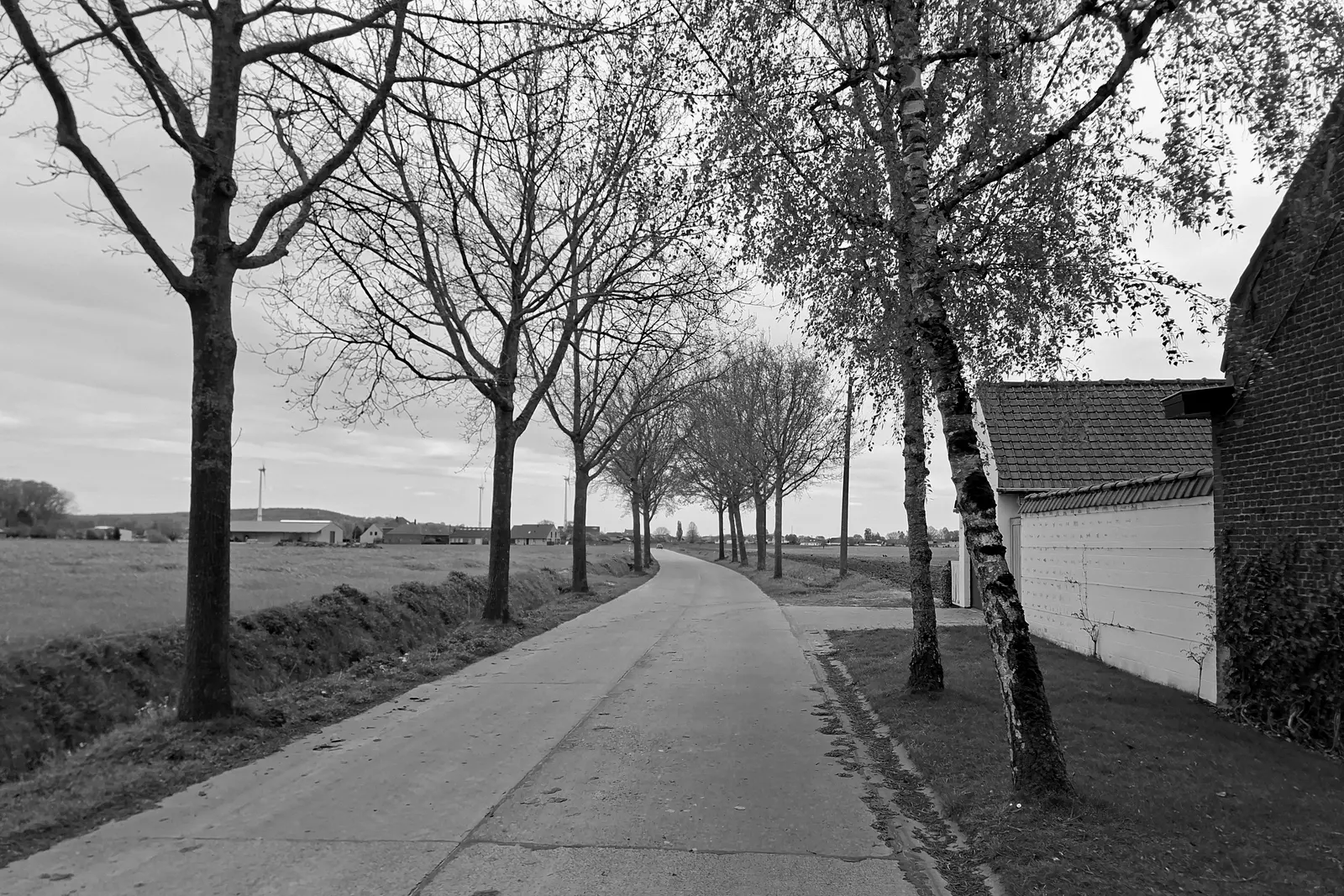
Riding sector after sector: handling repeated rough surfaces
Most riders don’t lose time on the cobbles by lacking power. They lose it by tensing up, braking and losing momentum on every sector. Some common principles:
| What to do | Why it helps |
|---|---|
| Arrive at speed, in a slightly bigger gear | Momentum carries the bike over the stones; a low gear and high cadence make it bounce. |
| Loose grip on the tops, elbows bent | Your arms soak up the vibration instead of passing it into your shoulders and hands. |
| Sit a little further back | Weight off the front wheel keeps it tracking straight over the stones. |
| Pick a line and hold it | Swerving between the crown and the edges costs more than a rough line ridden steadily. |
| Brake before the sector, not on it | Braking on loose or wet stones is where control goes. |
| Eat and drink on the road between sectors | Few riders can take a hand off the bars on the pavé. |
The organiser’s own advice is to double your usual bar tape, wear gloves and adjust your speed to the conditions, above all on the cobbled sectors. The roads stay open to traffic, so the Highway Code applies on and off the cobbles.
Bike, tyres and the kit the organiser asks for
Tyre choice matters more here than at almost any sportive. Many riders fit the widest tyres their frame clears and run lower pressure than on smooth roads, often tubeless, to reduce pinch flats and vibration. The right pressure depends on your weight, tyre width and rim, so ask ChatGPT or Claude to work it out from your setup, then test it on the roughest road you can find before April.
The organiser’s rules make a bottle or hydration pack, a repair kit with two inner tubes or a sealant kit for tubular or tubeless tyres, a pump, a helmet and a charged phone compulsory. Shimano runs fixed support points at the refreshment stations, with mobile support on the route. The handlebar plate must be fixed to the bars, visible and unbent, not around the stem, and the bib worn on your back.
Bikes must be approved by the French Cycling Federation. Electric bikes, recumbents and handlebar extensions aren’t allowed, according to the organiser’s rider FAQ. If you are thinking of a gravel or endurance bike for the clearance, check it against the organiser’s rules first.
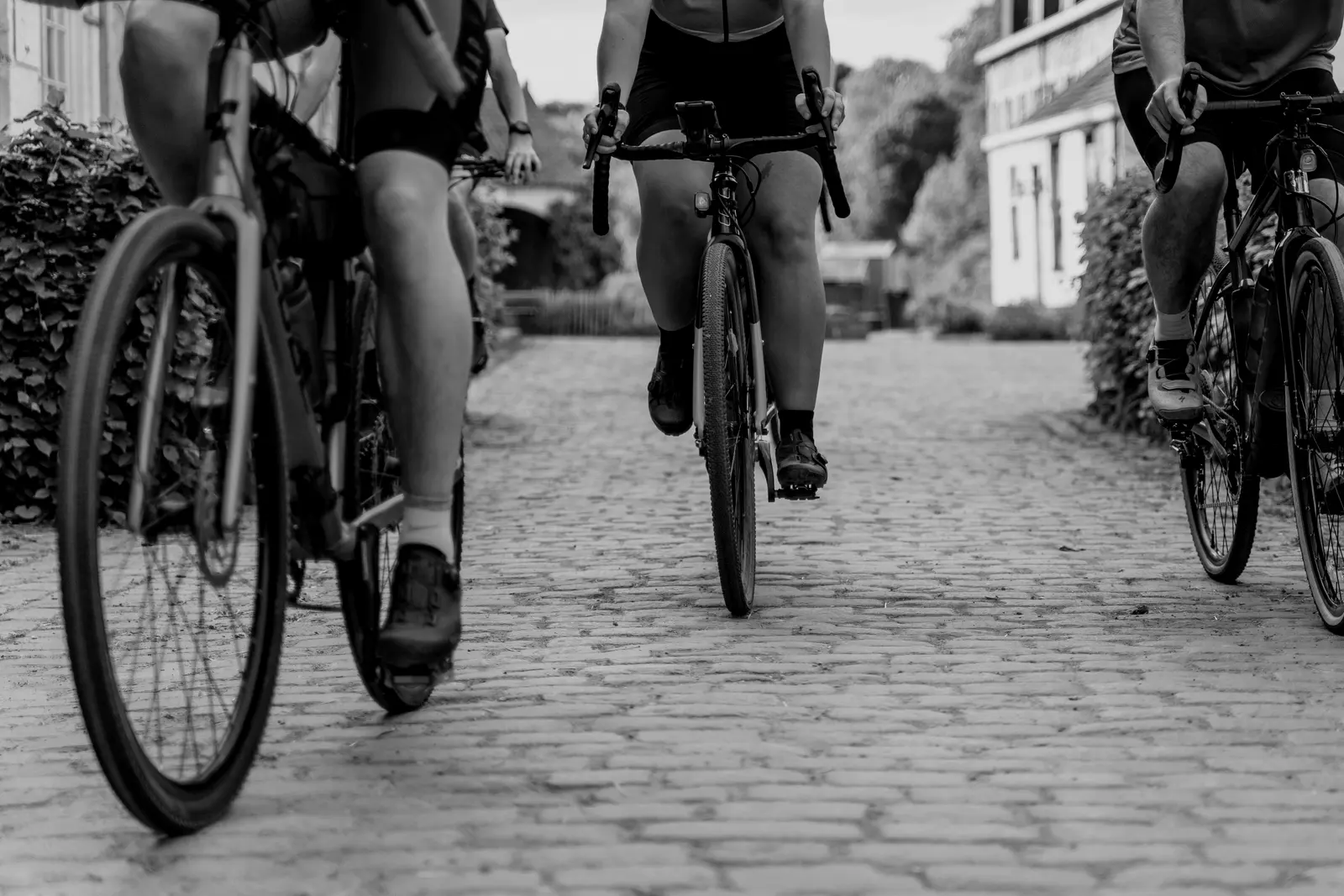
Start times, feeds and reaching the Roubaix velodrome
Every route finishes with half a lap of the open-air velodrome in Roubaix, entering the track from the left. The organiser’s rider FAQ asks 145 km riders to reach the velodrome before 4.30pm. From each end of the start window, the averages that needs, stops included, look like this.
| Start | Time to 4.30pm | Average needed over 145 km |
|---|---|---|
| 7am | 9 hours 30 minutes | About 15.3 km/h |
| 7.45am | 8 hours 45 minutes | About 16.6 km/h |
| 8.30am | 8 hours | About 18.1 km/h |
Refreshment stations serve water, fruit and sweet and savoury food, with no cups, so carry a bottle you can refill. Ask ChatGPT or Claude to plan your food and bottle refills around the stations on your route. Riders who stop are picked up and taken to the finish, and the ride isn’t timed: the organiser publishes no ranking.
Entry, rules and race weekend in Roubaix
Entry is through the organiser’s online registration. The organiser also offers charity places with Cure Leukaemia, group offers and packages through tour operators. Accident insurance is optional but highly recommended by the organiser. The organiser’s FAQ says there is no cancellation or refund of your bib. Athmex doesn’t sell or manage entries.
Riders must be at least 18 years old in 2027, and the FAQ says no medical certificate is needed. If you ride the 145 km, collect your bib at the Parc des Sports in Roubaix on Saturday 10 April, between 6.15am and 8.45am.
A Paris-Roubaix Challenge training plan by month
An early April date puts the whole build in winter. The cobbles ask for three things you can train: the durability to ride for hours, an upper body and core that hold up under vibration, and the handling to stay loose on rough ground.
| Month | What the training is for |
|---|---|
| December | Consistent easy riding, and strength work for core, back, shoulders and grip. |
| January | Indoor sessions with repeated efforts slightly over-geared, a little like riding a sector. |
| February | Long rides building towards your target time on the bike. Find rough roads or gravel tracks and ride them often. |
| March | Your longest ride, with as much rough surface as you can find, on your race tyres and pressure. Retest FTP. |
| Early April | A short taper. Bike checked, tyres settled, and the day’s food and start time planned. |
The route you choose and the hours you have decide what each week looks like. Tell ChatGPT or Claude your real week and what surfaces you can ride near home, and it can fit the months around them.
What to bring to your Paris-Roubaix Challenge training conversation
Put your route choice, current fitness, bike setup and training week in one place before you ask for a plan.
- Event
- Paris-Roubaix Challenge, Saturday 10 April 2027, and the route you’re aiming for.
- FTP
- Your current FTP and the date you tested it.
- Weight
- Your weight, for speed estimates and tyre pressure.
- Longest rides
- Your longest recent rides, with distance and time.
- Rough roads
- Any cobbles, gravel or broken roads you’ve ridden, and how your hands and back coped.
- Bike and tyres
- Your bike, the tyre width you run and the widest your frame clears.
- Weekly hours
- What you can really ride each week, indoors and out.
- Constraints
- Injuries, work, family and the trip to Roubaix.
Paris-Roubaix Challenge rider training example
A fictional rider, to show what a useful answer is built from: a dated FTP, real long rides, the bike and the hours.
The questionShould I ride the 145 or step up to the 170, and what tyres should I fit for 19 sectors?
A useful answer starts from 235 W at 78 kg and a longest ride of 120 km. It compares the rider’s likely cobbled speed with the organiser’s 14 km/h guide for the 170, checks the 145 against the 4.30pm velodrome time from an 8am start, notes that the frame clears only 30 mm tyres, and plans February around finding rough roads near home.
Long-distance cycling with ChatGPT or Claude covers the endurance this build relies on.
Example athlete profile
- Goal
- Finish the 145 comfortablyFirst time on cobbles
- Event
- Paris-Roubaix Challenge · Saturday 10 AprilMain event of the spring
- FTP
- 235 W · 3.0 W/kgTested in November
- Longest ride
- 120 kmLast September
- Bike
- Endurance road bikeClears 30 mm tyres
- Weekly hours
- 6 to 8Two indoor evenings
- Constraints
- Numb hands after three hoursNew gloves on order
- Max heart rate
- Not knownLeft blank until it’s measured
Questions to bring back during the build
A Paris-Roubaix Challenge build runs from December to the second Saturday in April. These are the moments to come back, with the question you might ask.
When you choose your route
I’ve entered the 145 km for 10 April. Save it as my main event and tell me what December is for.
A dated target lets every later answer count back from the day. Cycling training with ChatGPT explains what the assistant needs to start.
After your first rough-road ride
I rode 40 km of gravel and broken lanes and my hands were done after an hour. What should I change?
Your first real rough ride is the best evidence for your grip, your tyres and your pressure. Save what you learned in your notes in Athmex so later answers use it.
After an FTP retest
I tested at 246 W today. Save it, then tell me if the 170 is still out of reach.
A new FTP moves every estimate on this page. Save it with its date. Raising FTP with ChatGPT or Claude covers the testing.
In race week
I drive to Roubaix on Friday. Plan my bib collection, start time, tyre pressure and food for the sectors.
Race week is about arriving fresh, with the bike checked and the day planned. What to tell ChatGPT or Claude before the day lists what the conversation needs.
Getting your Roubaix context ready
- 01
Build your athlete profile
Add the Paris-Roubaix Challenge, 10 April 2027 and the route you’re aiming for, then your FTP with its test date, weight, longest rides, bike and tyre clearance, and weekly hours. Leave what you don’t know blank.
- 02
Connect ChatGPT or Claude
We walk you through it inside Athmex, step by step. No coding.
- 03
Bring your recent rides in too
We’ll show you the available options for bringing your rides from Garmin, Wahoo, Strava and other platforms into ChatGPT or Claude.
Where AI help stops
ChatGPT or Claude can misjudge a goal, plan more climbing than your body can absorb or rescale a whole block from a stale FTP, so read its plan critically and check it against how you feel.
Descending, bunch riding and mountain weather are skills and judgements no chat can practise for you. Pain, illness, fainting or anything medical needs a doctor. No AI can examine you.
Paris-Roubaix Challenge questions
Can ChatGPT make a Paris-Roubaix Challenge training plan?
Yes. ChatGPT or Claude can draft and adapt a Paris-Roubaix Challenge plan. It’s more useful when it knows your route, FTP with its test date, weight, longest recent rides, bike and tyres, and weekly hours. Athmex keeps those ready.
When is the Paris-Roubaix Challenge in 2027?
Saturday 10 April 2027, the 17th edition. The 170 km starts in Busigny from 7am to 8am, the 145 km in Roubaix from 7am to 8.30am and the 70 km in Roubaix from 9am to 10.30am.
How many cobbled sectors are on each Paris-Roubaix Challenge route?
The organiser lists 8 sectors on the 70 km, 19 on the 145 km, including the Trouée d’Arenberg, and 30 on the 170 km, which rides every cobbled sector of Paris-Roubaix.
Where do the Paris-Roubaix Challenge routes start and finish?
The 70 and 145 km start at the Parc des Sports in Roubaix, and the 170 km starts in Busigny, with a 4.30am shuttle from Roubaix. All three finish with half a lap of the Roubaix velodrome.
Is the Paris-Roubaix Challenge on closed roads?
No. It is a challenge ride on roads open to traffic, and riders must follow the French Highway Code. A helmet, a bottle, a repair kit, a pump and a charged phone are compulsory.
Is there a time limit on the Paris-Roubaix Challenge?
The organiser’s rider FAQ asks 145 km riders to reach the velodrome before 4.30pm. For the 170 km, it asks riders to be able to average 28 km/h on the road and 14 km/h on the cobbles.
What does Athmex add to ChatGPT or Claude?
Athmex keeps your athlete context ready for your Roubaix build: event, route, FTP, weight, weekly hours, injuries and constraints. ChatGPT or Claude does the coaching. Athmex doesn’t import activity, but it shows you the best available way to bring your recent rides into ChatGPT or Claude for your setup.
Keep your Roubaix build ready for ChatGPT or Claude.
Build your athlete profile once. Connect ChatGPT or Claude. Keep your event, FTP, weekly hours and constraints current from the first long ride to the start line.
You. Your fitness. Your activity data. Together in Claude and ChatGPT.