

Sydney Marathon training with ChatGPT or Claude.
Plan for Sydney’s climbs and a build that fits your season. Athmex gives your AI coach your race day, recent times and the week you really have. We’ll also help you connect your training platforms, so it can use your recent runs too.
14 days free · then $6.99/month · cancel anytime
Can ChatGPT or Claude help you train for the Sydney Marathon?
Yes. ChatGPT or Claude can help you plan a Sydney build, prepare for a course that climbs more than many runners expect, and fit long runs around your week. It needs your race day, recent times and where you can train on hills.
Athmex keeps those in one athlete profile that ChatGPT or Claude can use in every conversation. The assistant gives the advice; Athmex keeps the context current.
- Event
- Sydney Marathon
- Where
- Sydney, Australia. Starts on Miller Street in North Sydney, crosses the Harbour Bridge and finishes at the Sydney Opera House.
- Distance
- 42.2 km (26.2 miles)
- 2027 race day
- Sunday 29 August 2027
- Elevation
- 313 m of climbing, with an 83 m net drop from start to finish
- Time limit
- 7 hours from the close of the start window
The organiser’s plans and course figures for the 2027 race. Your entry confirms your start details. Athmex has no connection with the Sydney Marathon or its organiser.
Your recent runs belong in the conversation too
Over a long build, the useful questions come from the gap between the plan and the running you actually did.
When your recent runs reach ChatGPT or Claude through your training platform’s own connection, your coach can check how the long runs are building and whether last week went as planned. Routes differ by platform and by assistant.
Athmex doesn’t import activity. It keeps the context those runs are read against: your race day, goal, recent times and training week. Start your free trial and Athmex will show you the best available way to bring your runs into ChatGPT or Claude for your setup.
From Athmex
Your race day, goal, PBs, threshold, training days, injuries and constraints.
From your training platform
The runs you’ve done, from Garmin, COROS, Strava and others, where a route exists for your setup.
In ChatGPT or Claude
One coaching conversation that can use both when you ask about your Sydney build.
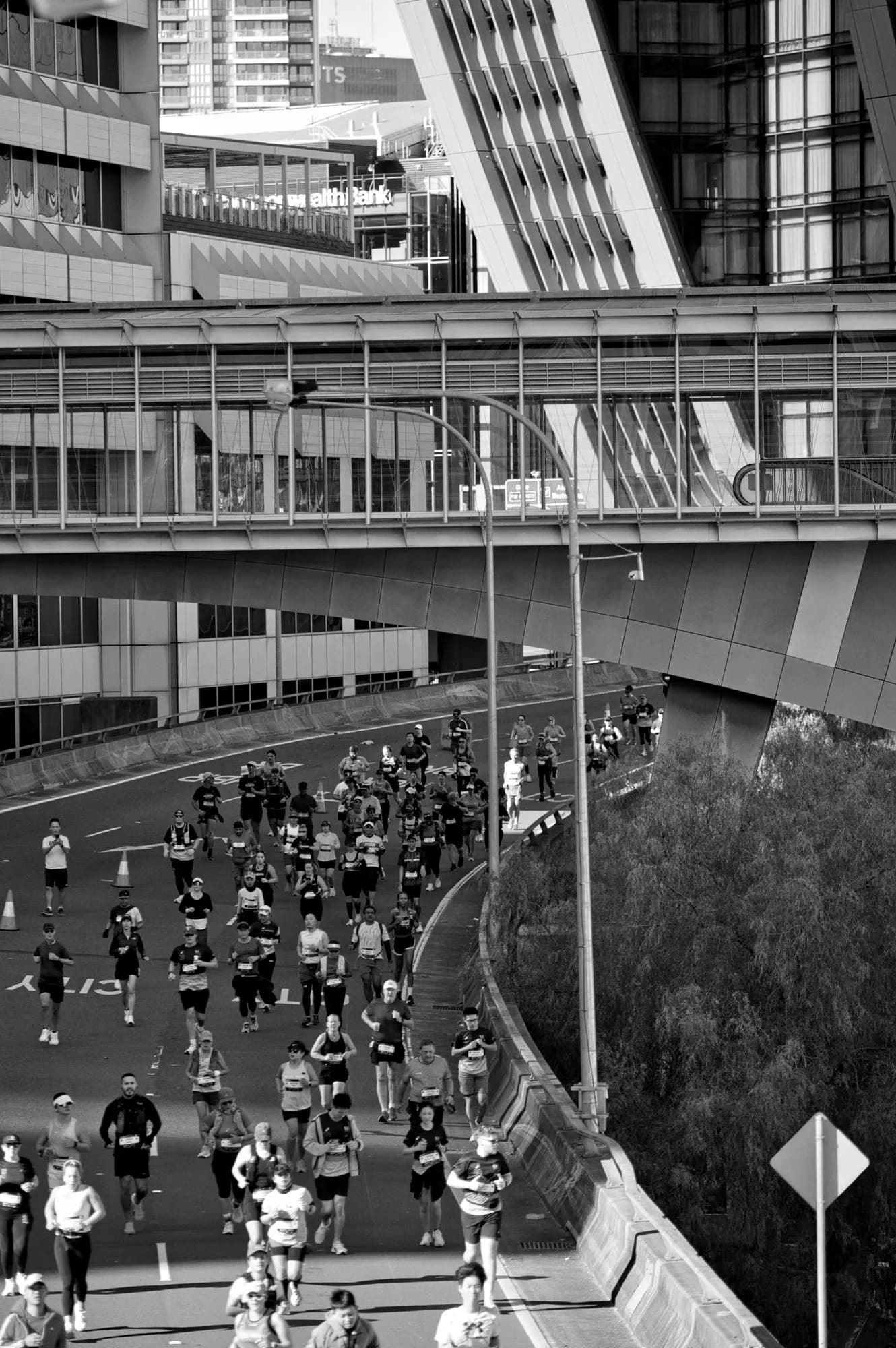
It climbs more than it looks
The organiser lists 313 m of climbing over the course, even though it finishes 83 m lower than it starts. For a runner who trains on flat paths, that’s a real difference between training and race day.
Tell ChatGPT or Claude where you can find hills and how often you can get to them. It can build regular climbing into the plan and help you pace the hills so they don’t cost you the last 10 km. Keep the course figures in your race notes in Athmex so you don’t need to repeat them.
A winter build at home, a summer one abroad
A late-August race means a winter build for runners in Australia and New Zealand, and a summer build, often in heat, for runners travelling from Europe or North America. The same plan template won’t suit both. Tell the assistant where you live and train, and the build can be shaped around your season.
What to bring to your Sydney training conversation
The facts that turn a generic marathon plan into a Sydney plan. Save them once in Athmex rather than retyping them.
- Race day
- Sunday 29 August 2027.
- Goal
- Finish and enjoy it, a round-number time or a specific target.
- Recent races
- Half-marathon, 10K or previous marathon times, each with its date.
- Current running
- How many days a week you run now and how long you’ve been consistent.
- Hills
- Where you can practise climbs near home, and how often.
- Season
- Whether your build runs through winter or summer where you live.
- Constraints
- Injuries and niggles, rosters, travel and anything else the build has to fit around.
One Sydney runner, one useful question
An illustrative runner, not a real athlete or customer. This is the profile ChatGPT or Claude could work from before the runner types a word.
The questionMy roads are flat and I work rotating shifts. How do I prepare for Sydney’s climbs on three days a week?
A useful answer builds around the roster, puts hill work into one of the three runs, and lifts the long run gradually with the Achilles in mind. It starts from the May half, not the goal.
Can ChatGPT predict your marathon time? explains why a flat half needs care when the marathon isn’t flat.
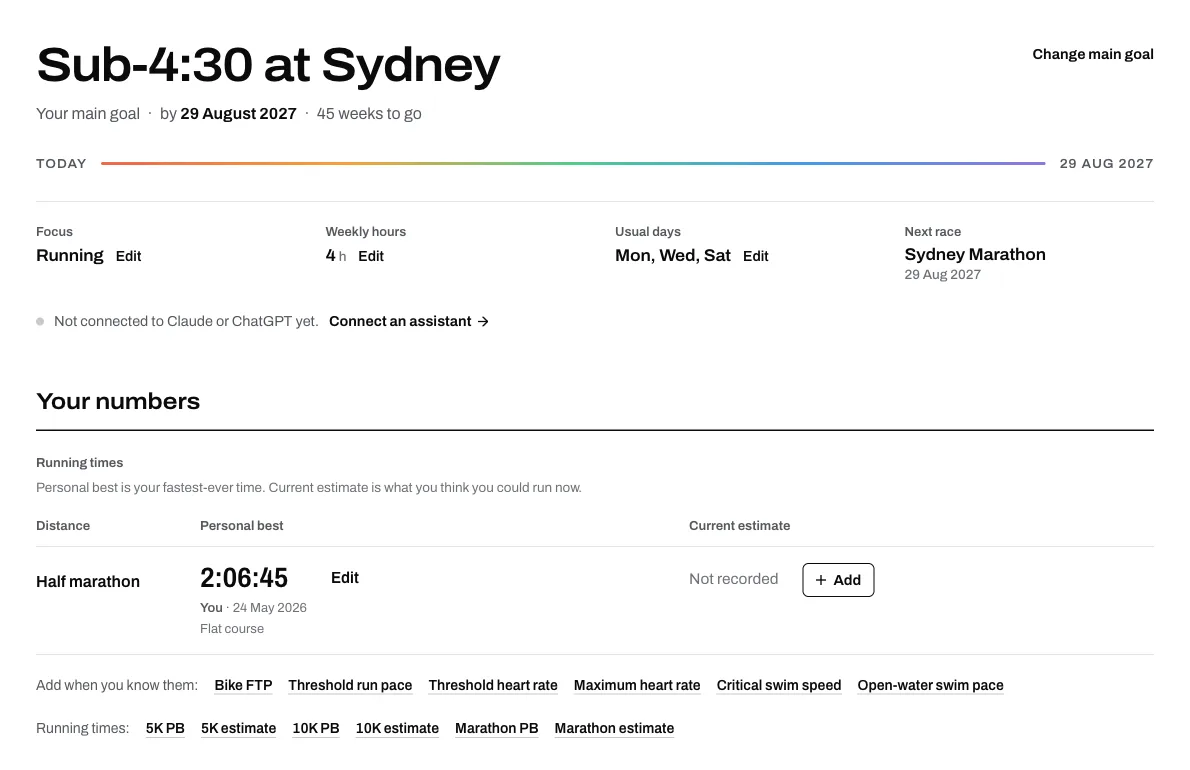
Example athlete profile
- Goal
- Sub-4:30 marathonFirst marathon
- Race
- Sydney Marathon · Sunday 29 AugustMain race of the year
- PBs
- Half 2:06:45Set in May on a flat course
- Threshold
- Not knownLeft blank until it’s measured
- Training days
- Three days a weekAround rotating shifts
- Terrain
- Flat river pathsSteep streets ten minutes away
- Injuries
- Right AchillesStiff in the mornings
Questions to bring back during the build
A Sydney build runs for months. These are the moments to come back, with the question you might ask.
When your roster changes
I’m on nights for the next three weeks. Rework my running around them.
A changed roster needs a changed plan. If it lasts, update your training days in Athmex so later conversations plan around the week you really have. Why an AI plan ignores your schedule explains what goes wrong when it doesn’t know.
After a winter half
I ran 2:01:30 at a half on Sunday. Update my PB, then tell me what it means for Sydney.
A half marathon during the build is the clearest check on your fitness. Save it with its date. What to update after a race covers the rest.
When the goal needs to change
My Achilles has flared up. Should I drop the sub-4:30 goal and just finish?
A good coach is honest when the target no longer fits the build. Pain that changes how you run needs a physio first. Once you’ve decided, update the goal in Athmex.
In race week
I’m flying to Sydney on Thursday. Plan my last few days and race morning.
Race week is about arriving fresh, with travel, sleep, meals and your pacing plan for the hills settled. What to tell ChatGPT or Claude before race day lists what the conversation needs.
Getting your Sydney context ready
- 01
Build your athlete profile
Add Sydney, its date and your goal, recent times, training days and where you can train on hills. Leave what you don’t know blank.
- 02
Connect ChatGPT or Claude
We walk you through it inside Athmex, step by step. No coding.
- 03
Bring your recent runs in too
We’ll show you how to bring available activity data from Garmin, COROS, Strava and other platforms into ChatGPT or Claude.
Where AI help stops
A marathon build is long enough for small misunderstandings to add up. ChatGPT or Claude can misjudge a goal, pacing you off the target rather than your fitness, or suggest more than your body can take, so read its plan critically and check it against how you feel.
Pain that changes how you run, illness, fainting or anything medical needs a doctor or physio. No AI can examine you.
Sydney Marathon questions
Can ChatGPT make a Sydney Marathon training plan?
Yes. ChatGPT or Claude can draft and adapt a Sydney plan. It’s more useful when it knows your race day, goal, recent race times with dates, current running, where you can train on hills and your constraints. Athmex keeps those ready.
Is the Sydney Marathon hilly?
It has more climbing than many runners expect. The organiser lists 313 m of climbing over the course, with an 83 m net drop from the North Sydney start to the Opera House finish.
When is the 2027 Sydney Marathon?
Sunday 29 August 2027. It starts on Miller Street in North Sydney, crosses the Harbour Bridge and finishes at the Sydney Opera House.
What is the Sydney Marathon time limit?
7 hours, counted from the close of the start window.
What does Athmex add to ChatGPT or Claude?
Athmex keeps your athlete context ready for your Sydney build: race day, goal, PBs, threshold, training days, injuries and constraints. ChatGPT or Claude does the coaching. Athmex doesn’t import activity, but it shows you the best available way to bring your recent runs into ChatGPT or Claude for your setup.
Keep your Sydney build ready for ChatGPT or Claude.
Build your athlete profile once. Connect ChatGPT or Claude. Keep your race day, times, training days and constraints current from the first long run to race week.
14 days free · then $6.99/month · cancel anytime